Enhanced/Dual Powered
Willem EPROM Programmer
User Guide
Main Board / Cables
Main Board PCB3.5
Main Board PCB4E

Main Board PCB5.0

Main Board PCB5.5C

|
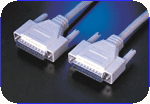
Parallel Data Cable (Printer extension cable, with male-female 25 pin connector, and pin to pin through) |
A-A type USB cable(for power) |
|
|
|
Optional Items:
|
ATMEL 89 Adapter |
ATMEL PLCC 44 Adapter |
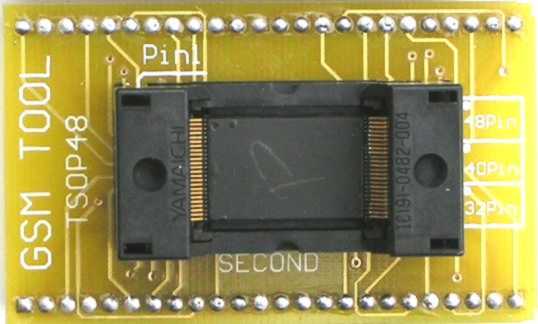
TSOP 48 Adapter |
|
|
|
|
|
FWH/HUB PLCC32Adapter |
PLCC32 Adapter |
SOIC Adapter(Simplified) |
|
On-Board |
On-Board |
|
|
AC or DC Power Adapter (9V or 12V, 200mA) |
SOIC Adapter(Professional) |
|
|
|
|
|
Add a high-quality algorithmic or convolution reverb to give the piano a sense of space and depth.
The Z-Doc series has undergone several iterations, each fine-tuning velocity curves, sample decay, and multi-layer combinations to meet different musical needs. Z-Doc Soundfont I
He struck a low C.
If you have searched for "zdoc piano soundfont top," you are likely looking for a lightweight, realistic, and responsive piano sample library for Fluidsynth, MuseScore, LMMS, or even a hardware MIDI player. Here is why ZDoc remains at the top of the charts. zdoc piano soundfont top
If you are looking for other top-tier free piano soundfonts to pair with or compare against Z-Doc, these are currently highly rated: Z-Doc Grand Piano + Arachno Soundfont Drumkits
The Zdoc Piano is a custom-sampled acoustic piano distributed in the SF2 (Soundfont) format. It was created during an era when computer memory was scarce, forcing sound designers to be incredibly efficient with sample compression, looping, and velocity layering.
To truly maximize the "top" potential of this soundfont, do not just load it and leave it flat. Add a high-quality algorithmic or convolution reverb to
Z-Doc Piano Soundfont (often associated with high-performance MIDI playback and "Black MIDI") is highly regarded for its balance between file size and professional audio quality. It is a modded instrument bank typically used in specialized MIDI players and digital audio workstations (DAWs) to achieve a "dreamy," high-fidelity grand piano sound. 1. Top Z-Doc Versions & Related Soundfonts Z-Doc Soundfont IV (Dream Modded)
Instead, he had "Grand_Piano_V2.mp3." It sounded like a toy. It sounded like a calculator.
You need a VST host to read the SF2 file. Some of the best free options include: If you have searched for "zdoc piano soundfont
In heavy MIDI files, a piano with a slow, realistic hammer-softening mechanism will sound muddy. Top soundfonts like Z-doc use samples with an immediate, percussive dynamic attack. This guarantees that every note is audible, even if its duration is only a fraction of a second. 2. Strict Polyphonic Resource Allocation
Acquire the core archive directly via the Z-doc Piano Soundfont Repository. Step 2: Choose a Soundfont Player or Host
Hardware Installation & Configuration
|
Installation Steps
(Note: the LPT port of PC MUST set to ECP or ECP+EPP during BIOS setup. To enter the BIOS setting mode, you need press "Del" key or "F1" key during the computer selftest, which is the moment of computer just power up.)
Software Version To Use | |||
| |||
|
| |||
|
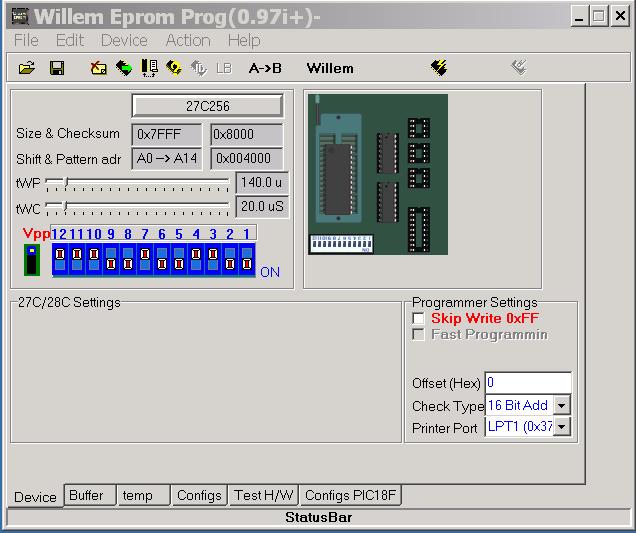
The software interface:
| |||
|
| |||
|
Hardware
Check
| |||
|
PCB3.5/PCB4E
PCB5.0
PCB5.5C
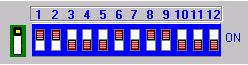
Note: the Vcc setting jumper only has effect when you are using AC adaptor as power source. For the USB power only 5V Vcc is available. For the PCB5.5C, set DIP steps: 1. press DIP Set button twice to check current DIP bit position. Then set it again for ON or OFF. 2. press DIP Bit shift button to shift the DIP bit position to where need to set. And then press DIP Set button twice to check current DIP bit position. Then set it again for ON or OFF. 3. Repeat those steps till all DIP bit ae set same as software indicated. For PCB5.5C voltage and Special chip selection: 1. Put back the safety jumper. 2. Press the voltage button and hold for 1 second, the voltage LED should move to next. Repeat till desired voltage LED light up. 3. Press the chip selection button and hold for 1 second, the chip LED should move to next. Repeat till desired LED light up. 4. Remove the safety jumper to lock the selected voltage and chip selection DIP Switch (PCB3.5, PCB5.0)
When programming one chip, follow the program prompt to set DIP switch .
|
Add a high-quality algorithmic or convolution reverb to give the piano a sense of space and depth.
The Z-Doc series has undergone several iterations, each fine-tuning velocity curves, sample decay, and multi-layer combinations to meet different musical needs. Z-Doc Soundfont I
He struck a low C.
If you have searched for "zdoc piano soundfont top," you are likely looking for a lightweight, realistic, and responsive piano sample library for Fluidsynth, MuseScore, LMMS, or even a hardware MIDI player. Here is why ZDoc remains at the top of the charts.
If you are looking for other top-tier free piano soundfonts to pair with or compare against Z-Doc, these are currently highly rated: Z-Doc Grand Piano + Arachno Soundfont Drumkits
The Zdoc Piano is a custom-sampled acoustic piano distributed in the SF2 (Soundfont) format. It was created during an era when computer memory was scarce, forcing sound designers to be incredibly efficient with sample compression, looping, and velocity layering.
To truly maximize the "top" potential of this soundfont, do not just load it and leave it flat.
Z-Doc Piano Soundfont (often associated with high-performance MIDI playback and "Black MIDI") is highly regarded for its balance between file size and professional audio quality. It is a modded instrument bank typically used in specialized MIDI players and digital audio workstations (DAWs) to achieve a "dreamy," high-fidelity grand piano sound. 1. Top Z-Doc Versions & Related Soundfonts Z-Doc Soundfont IV (Dream Modded)
Instead, he had "Grand_Piano_V2.mp3." It sounded like a toy. It sounded like a calculator.
You need a VST host to read the SF2 file. Some of the best free options include:
In heavy MIDI files, a piano with a slow, realistic hammer-softening mechanism will sound muddy. Top soundfonts like Z-doc use samples with an immediate, percussive dynamic attack. This guarantees that every note is audible, even if its duration is only a fraction of a second. 2. Strict Polyphonic Resource Allocation
Acquire the core archive directly via the Z-doc Piano Soundfont Repository. Step 2: Choose a Soundfont Player or Host