Reshma Hot Mallu Aunty Boobs Show And Sex Mallu Masala Indian Hot Target //top\\ | 2026 Release |
Despite operating on a fraction of the budget of Bollywood or Tamil cinema, Mollywood pushed technical boundaries. Sound design, realistic lighting, and guerrilla filmmaking tactics became hallmarks of the industry.
Then there is Kumbalangi Nights (2019), which dismantled the toxic masculinity previously celebrated in mainstream cinema. It presented a dysfunctional family in the backwaters of Kumbalangi, where the climax is not a fight scene but a "confession of love" between brothers. This mirrors a cultural shift in Kerala: the move away from the Nair tharavad (ancestral home) rigidity toward emotional vulnerability.
Malayalam cinema, also known as Mollywood, is a thriving film industry based in Kerala, India. With a rich cultural heritage and a history spanning over a century, Malayalam cinema has evolved into a distinct entity, showcasing the unique traditions, values, and experiences of the Malayali people. In this feature, we'll delve into the fascinating world of Malayalam cinema and culture, exploring its history, notable filmmakers, and iconic films, as well as the cultural nuances that make it so distinctive. Despite operating on a fraction of the budget
A watershed moment was Dileesh Pothan's Maheshinte Prathikaaram (2016) . It ushered in an era of "hyper-realistic" small-town stories, deadpan humour, and natural lighting. This wave has gained international acclaim:
This obsession with the "everyman" reflects Kerala’s own self-image: a society that is highly educated, deeply political, and perpetually anxious about its own contradictions (religious orthodoxy vs. communism, wealth from the Gulf vs. traditional agrarian poverty). It presented a dysfunctional family in the backwaters
, considered the father of the industry, who directed the silent film Vigathakumaran in 1928. The first "talkie,"
Malayalam cinema is inseparable from Kerala’s culture: With a rich cultural heritage and a history
Consider Jallikattu (2019)—a film about a village chasing a runaway buffalo. On the surface, it is an action thriller. Below the surface, it is a terrifying, primal scream about the collapse of civilization, masculinity, and community. That film was India’s official entry to the Oscars. This is not accidental. Malayalam cinema has mastered the art of using the specific (a buffalo, a small-town barber, a political goon) to speak to the universal (hunger, ego, failure).
Despite its critical acclaim, the industry faces ongoing challenges. The historical lack of gender diversity behind and in front of the camera led to the formation of the Women in Cinema Collective (WCC) in 2017, a pioneering movement in Indian cinema advocating for safer work environments and gender equality. Internally, the industry constantly battles the rising costs of production against a relatively small native theater-going audience.
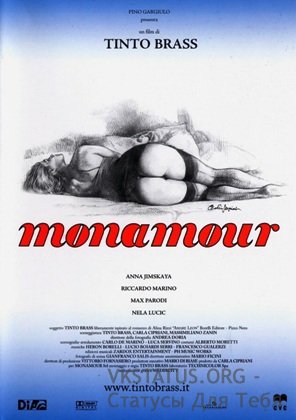
![Любовь моя / Monamour (2005) DVDRip [2100mb]](https://24-info.lol/uploads/posts/2013-10/eroticheskie-filmy_lyubov-moya-monamour-2005-dvdrip-2100mb_1.jpeg)


![Малена / Malena (2000) DVDRip [1.46GB]](https://24-info.lol/uploads/posts/2013-10/eroticheskie-filmy_malena-malena-2000-dvdrip-146gb_1.jpeg)


![Ключ / La Chiave (1983) DVDRip [1400mb]](https://24-info.lol/uploads/posts/2013-10/eroticheskie-filmy_klyuch-la-chiave-1983-dvdrip-1400mb_1.jpeg)