 |
 |
 |
 |
 |
 |
 |
 |
|
  Alex Norko |
|
|
|
|
|
Mireille FERCHAL |
|
|
|
|
|
Hawley Stewart |
|
 |
|
 |
|
|
 |
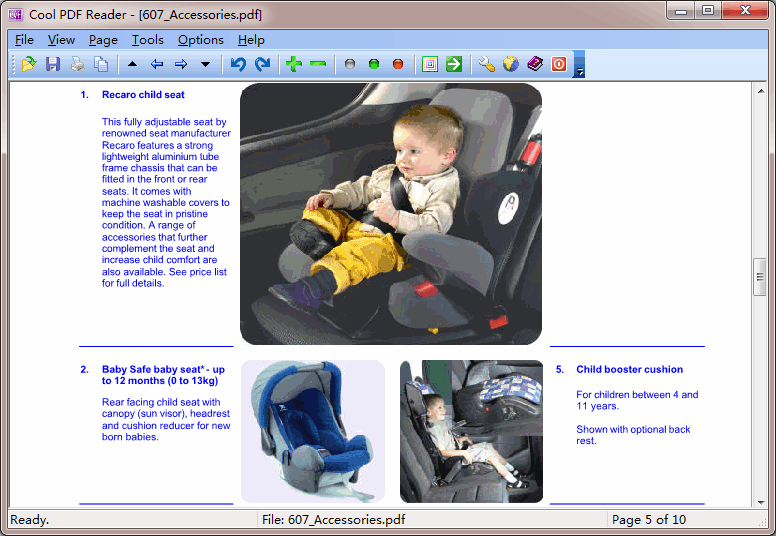
The world's smallest PDF viewer/reader to view, print,
extract, crop, and
convert PDF files to TXT, BMP, JPG, GIF, PNG, WMF, EMF, EPS, TIFF. Cool PDF Reader is
only 3.2MB for download and doesn't
need lengthy installation, just download and run. Freeware!

Real Incest Son Sneaks Up On Sleeping Mom And F New __link__ -
Monolithic characters make for boring drama. To create a rich tapestry of relationships, ensure that every sub-relationship within the family has its own unique flavor. Sibling Rivalry
In the pantheon of storytelling mediums—from the sweeping epics of ancient literature to the bingeable prestige television of today—one theme remains eternally resonant: the family drama. We like to believe that home is a sanctuary, a place of unconditional love and shared history. Yet, as any great writer or showrunner knows, the hearth is also where the hottest fires burn. The locked door of a family home conceals not just safety, but secrets, rivalries, debts of gratitude, and the slow, simmering resentment of decades.
If you are developing a specific project, please share a few details so we can refine the narrative. Tell me:
Parents often project their failed dreams onto their offspring, creating a pressure cooker environment. real incest son sneaks up on sleeping mom and f new
The family's journey was not easy, but it was worth it. They learned that family is not just about blood ties, but about the relationships we cultivate and nurture. They realized that it's okay to not be perfect and that imperfection is what makes life interesting.
The best endings for complex family relationships offer or radical acceptance .
[ The Patriarch / Matriarch ] (Control & Tradition) | +---------+---------+ | | [ The Golden Child ] [ The Scapegoat ] (Perfection Trap) (Target of Blame) | | [ The Enabler ] [ The Lost Child ] (Defends Abuse) (Invisible/Silent) Monolithic characters make for boring drama
Here’s the thing about modern life: we’re lonelier than ever, yet more performative than ever. Social media shows us polished family photos. Work demands we be “professional” and uncomplicated. But inside, most of us are carrying at least one family wound—a rift with a parent, a rivalry with a sibling, a holiday that went wrong and was never discussed.
As storytellers, our job is not to provide solutions. It is to expose the machinery of love, guilt, and inheritance. Whether you are writing a prestige miniseries about a media tycoon or a short story about a quiet dinner in Ohio, remember:
Great family drama is built on foundational tensions that never fully resolve. These are not plot points but engines that generate continuous friction: We like to believe that home is a
Maintaining a clean public image despite internal chaos (e.g., substance abuse, infidelity, or crime).
Even if you never stole a company from your father (like the Roys) or burned down a house (like the Whitmans), you understand the feeling of competing for a parent’s gaze. Great family drama takes specific, often toxic, dynamics and amplifies them to operatic levels. We watch because we see our own whispered arguments reflected in their screaming matches.
Healthy or chaotic, families rarely speak in neat, alternating paragraphs. They interrupt, finish each other's sentences, talk over one another, and tune each other out. 5. Finding the Balance: Darkness and Light
|
|
|