Hung Teen Shemales Full - |work|
Hung Teen Shemales Full - |work|
Despite these challenges, the transgender community has made significant strides in recent years. The increasing visibility of trans individuals in media, politics, and everyday life has helped raise awareness and promote understanding.
By the late 1990s and early 2000s, this division began to heal. Activists successfully fought to add the "T" to the LGB acronym, arguing that liberation from rigid gender roles was a goal that united both sexual minorities and gender minorities. Today, it is widely recognized that homophobia and transphobia stem from the same root cause: the policing of traditional gender expectations. 3. Cultural Contributions: Shaping the Global Landscape
True allyship requires continuous learning and intentional action to support the trans community.
This tension led to the explicit exclusion of trans people from the first major gay rights bill in New York, the Sexual Orientation Non-Discrimination Act (SONDA), which deliberately omitted gender identity. Rivera famously crashed a gay rights rally in 1973, shouting, "You all tell me, 'Go away. You're too visible. You're too flamboyant.' You've been treating us like dirt for 10 years!" Her anger was a prophetic warning: a movement that abandons its most marginalized members risks losing its soul. hung teen shemales full
The Haven wasn’t just a bar; it was a living archive. On the walls hung photos of the elders who had fought during the riots decades ago, their faces etched with a defiance that allowed Maya to stand here now. This was the heart of their culture—a tapestry of "chosen family" where biology mattered less than the shared experience of becoming oneself.
To understand why the "T" is not just an add-on but a critical part of the whole, one must look at the data. The transgender community faces staggering levels of violence, discrimination, and mental health crises that, while present in the broader LGB community, are amplified to an extreme degree.
Understanding the Transgender Community and LGBTQ+ Culture: History, Visibility, and Intersectionality Despite these challenges, the transgender community has made
The first time Marisol walked into a dedicated LGBTQ+ space, it was a Wednesday evening in February. The in Chicago. She wore a gray hoodie, her hair still short, her nails unpainted. She almost turned back three times. But a butch woman with a silver nose ring and a lanyard that said "Volunteer" held the door open.
If you are developing content for a specific platform, let me know:
Because of this distinction, the challenges faced by each community, while overlapping, are not identical. A gay man faces homophobia—discrimination based on his same-gender attraction. A trans woman faces transphobia—discrimination based on her gender identity not matching her sex assigned at birth. She also faces transmisogyny, a specific intersection of transphobia and misogyny. The fight for marriage equality (a gay and lesbian priority) does not automatically solve the issue of healthcare coverage for gender-affirming surgery (a trans priority). Activists successfully fought to add the "T" to
Intersecting Sexual Identities, Oppressions, and Social Justice Work
However, the relationship is not utopian. In recent years, a wedge has been driven into the coalition by those who believe that the fight for gay rights is "finished." This “LGB without the T” movement is a dangerous fantasy, a denial of the shared enemy. The person who burns a rainbow flag outside a drag queen story hour is not checking ID cards to see if the reader is cisgender. Transphobia is homophobia’s twin; both are rooted in the policing of what bodies are allowed to do and whom they are allowed to love.
Perhaps no single cultural artifact better illustrates the fusion of trans identity and LGBTQ culture than the . Originating in Harlem in the 1920s and exploding in the 1980s, ballroom was a counterculture created by Black and Latinx queer and trans people who were excluded from white-dominated gay bars.
To understand this relationship, we have to look at how these communities intersect, the unique challenges trans individuals face, and the cultural shifts they continue to lead. The Historical Anchor: A Shared Fight
Similar Design
j000012d
cncdesignerclub.com
dxf jali-pattern
0
jali1
cncdesignerclub.com
dxf jali-pattern
0
j2d00001
cncdesignerclub.com
dxf jali-pattern
0
jali000003
cncdesignerclub.com
dxf jali-pattern
1
jali00004
cncdesignerclub.com
dxf jali-pattern
2
See All
Welcome to our website! We provide expert services in CNC machining, utilizing advanced
technologies like Computer
Numerical Control (CNC). Our team excels in working with various file formats, including DXF and RLF. DXF, a
versatile vector format,
ensures seamless data exchange between different software programs, enabling precise 2D representations. On the
other hand, RLF, specific to ArtCAM software,
caters to 3D relief carving needs. With our expertise and proficiency in CNC machining and file
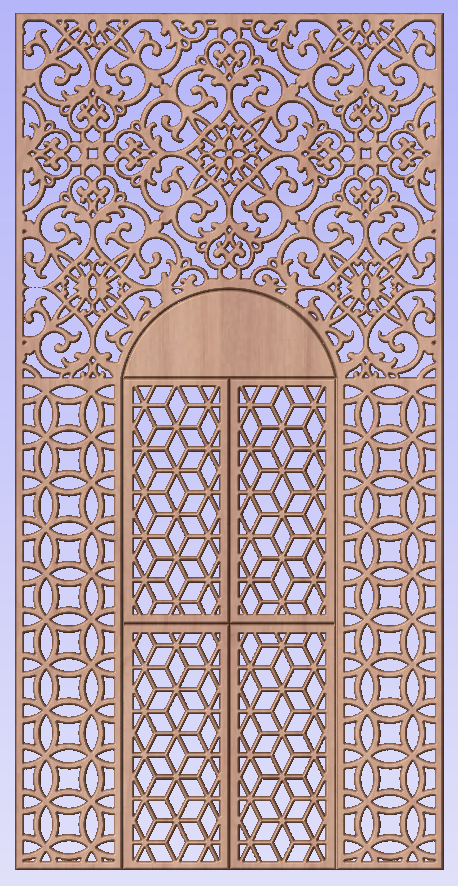
jali design, pattern, door design, almirah design, wardrobe design, plasma cutting
Computer Numerical Control (CNC) is a technology that has revolutionized manufacturing processes across various
industries. With its precision and automation capabilities, CNC machines have become integral to modern
production. Here is a 427-word overview of CNC:
CNC stands for Computer Numerical Control, and it refers to the automation of machine tools through the use of
computer systems. These computer-controlled machines are widely used in manufacturing to produce intricate and
precise parts and components. CNC technology has significantly improved productivity, accuracy, and
repeatability in the production process.
One of the key advantages of CNC is its ability to interpret and execute instructions with exceptional
precision. The CNC machine reads instructions from a computer program, often created using Computer-Aided Design
(CAD) software. These instructions guide the machine's movements, specifying parameters such as cutting depths,
tool paths, and feed rates.
CNC machines are employed in various industries, including automotive, aerospace, electronics, and woodworking.
They can perform a wide range of operations, such as milling, turning, drilling, grinding, and routing. The
versatility of CNC machines allows for the production of complex geometries and intricate designs that would be
challenging or impossible to achieve with manual machining.
The core components of a CNC system include the machine tool itself, the control unit, and the software. The
machine tool comprises the physical equipment responsible for cutting, shaping, or drilling the material. The
control unit houses the computer and electronics that interpret and execute the instructions. The software,
often referred to as CAM (Computer-Aided Manufacturing), generates the toolpaths and converts them into a format
readable by the CNC machine.
CNC machines offer numerous benefits to manufacturers. First and foremost, they enhance productivity by
automating tasks that would otherwise require manual labor. Additionally, CNC machines provide consistent and
repeatable results, ensuring high-quality output. They also minimize the risk of human error and increase safety
in the workplace.
Another advantage of CNC technology is its flexibility. With proper programming and tooling changes, CNC
machines can produce different parts and products, making them adaptable to changing production demands. This
flexibility enables manufacturers to reduce setup times and efficiently handle small batch sizes or custom
orders.
Furthermore, CNC machines have the capability to integrate with other manufacturing processes, such as robotic
loading and unloading, to create fully automated production cells. This integration improves efficiency and
reduces the need for manual intervention, resulting in higher throughput and reduced labor costs.
In recent years, advancements in CNC technology have further expanded its capabilities. Modern CNC machines
often feature advanced sensors, real-time monitoring, and data analytics, enabling predictive maintenance and
optimization of machining processes.
Overall, CNC has transformed the manufacturing landscape by enabling precise, automated, and efficient
production. As technology continues to advance, CNC machines are likely to become even more powerful, versatile,
and integrated with other emerging technologies such as artificial intelligence and the Internet of Things
(IoT), further enhancing their impact on the manufacturing industry.
Cncdesigner Club-passionate for design
Cnc Designer club-passionate for design